
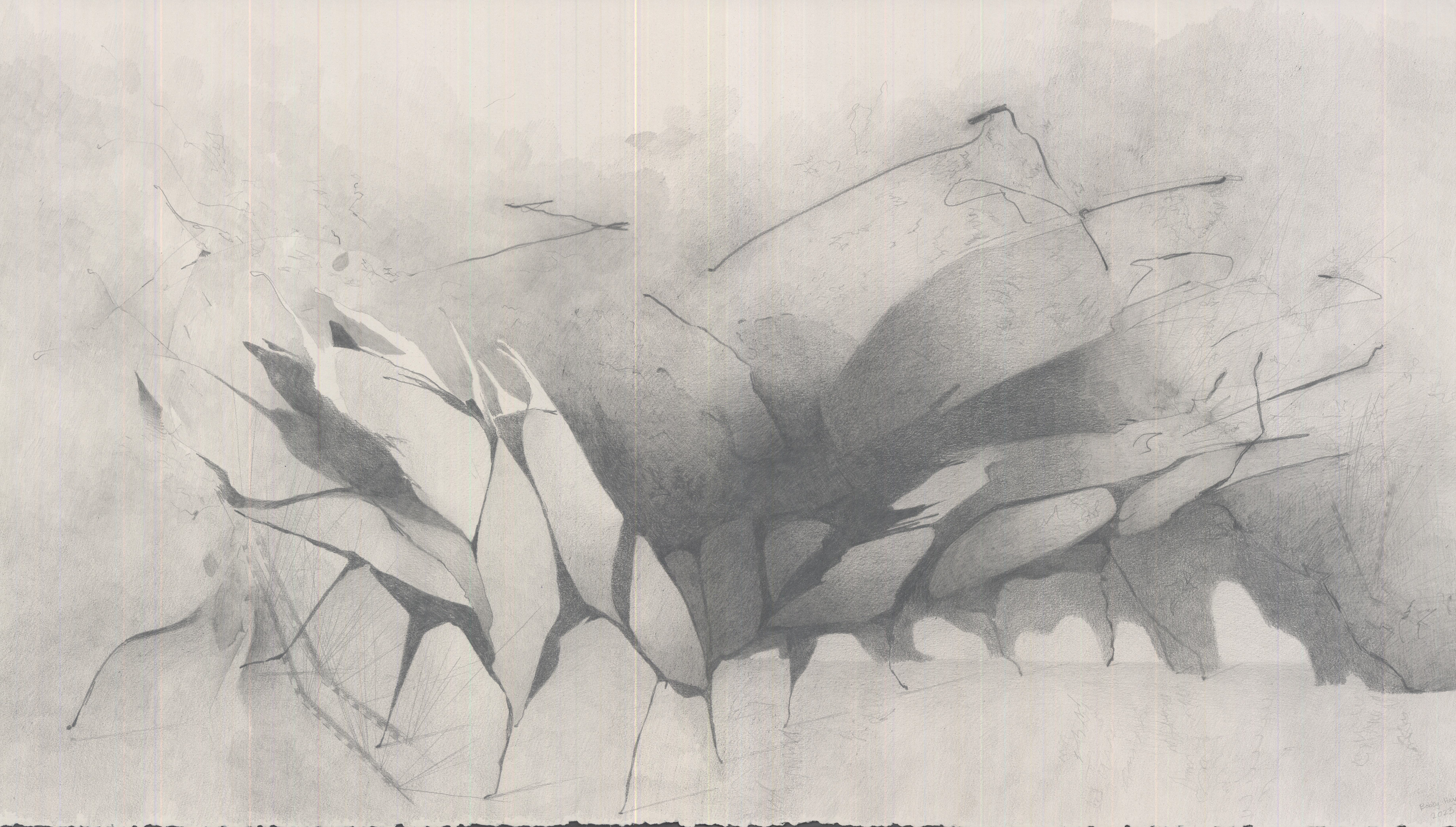
The analytique comes from 19th century French architectural practice and education
(Ecole des Beaux-Art) and has since grown into a commonplace drawing exercise, receiving little innovation beyond those that our drawing/drafting technologies are treated with. The established convention of the analytique focuses on the formal properties of a building, particularly taking interest in ornamentation and overall composition. While these formal properties are an inherently important aspect of any building, I argue that this approach is very much derivative of architectural practice and is not historically equipped to address the unique aspects of the interior environment. This more traditional approach of the analytique is an excellent documentation of formal principles and physical details but to observe the interior environment first for its series of positive forms rather than as an atmosphere of ephemeral negative volumes and eroding, ever evolving surfaces fails to address the true or experienced character of a space or architecture.
(Ecole des Beaux-Art) and has since grown into a commonplace drawing exercise, receiving little innovation beyond those that our drawing/drafting technologies are treated with. The established convention of the analytique focuses on the formal properties of a building, particularly taking interest in ornamentation and overall composition. While these formal properties are an inherently important aspect of any building, I argue that this approach is very much derivative of architectural practice and is not historically equipped to address the unique aspects of the interior environment. This more traditional approach of the analytique is an excellent documentation of formal principles and physical details but to observe the interior environment first for its series of positive forms rather than as an atmosphere of ephemeral negative volumes and eroding, ever evolving surfaces fails to address the true or experienced character of a space or architecture.
Going back to the historical contexts behind my thinking here, to me the style of the analytique falls very much in line with Enlightenment ideals and values around rationality and knowledge. To posit knowledge as the true measure of the universe converted that universe into a series of commodities and it is no surprise then that these ideas came from a world beginning to play with industrialization, capitalism, and land privatization. It is to discredit the many other ways in which we engage with the world around us such as through emotion, intuition, or aesthetics. Western existentialist philosophy (especially as developed by Nietzsche, Simone des Beauvoir, Jean Paul Sartre, etc) during the mid 20th century developed a deep appreciation for the arts as another dimension of the human experience. While knowledge, emotion, aesthetics, and more have since begun to reconcile, our modes of representing space have shifted very little
from the original proposal and so have not grown in any substantial capacity since its inception over one hundred years ago.
from the original proposal and so have not grown in any substantial capacity since its inception over one hundred years ago.
Here I wanted to emphasize the qualities of our built environment which are so often neglected in order to propose a new way of conceiving of the analytique. I want to challenge our idea of good and bad, the predecessors of good and evil, to offer a take on the analytique which values all its constituent parts equally, extending itself beyond the purely visible, objective, or rational.